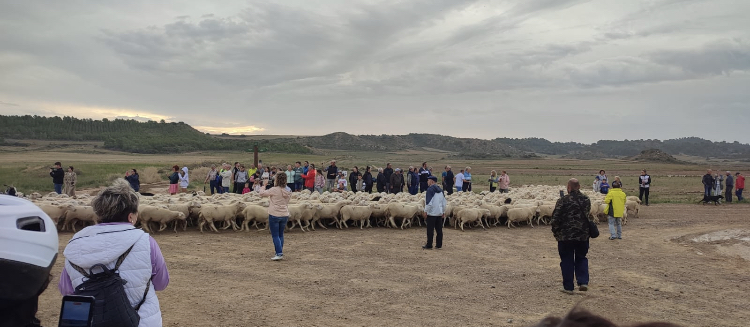
13-19 September
Olite/Erriberri Festivities
Olite - Erriberri

A municipality with a wealth of historical and cultural heritage
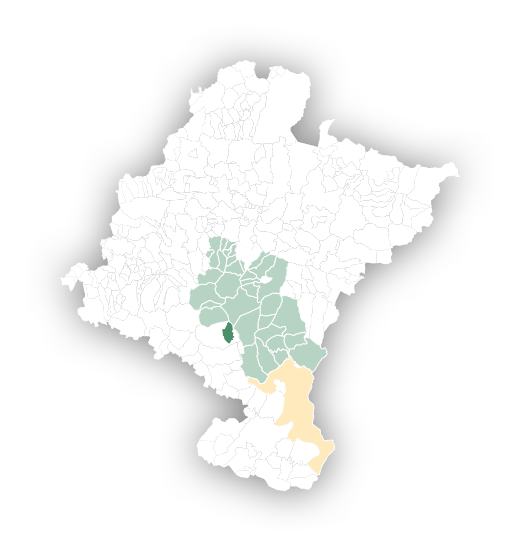
Guirguillano and Echarren de Guirguillano are nestled in rugged mountains and run down to the crossing with the River Arga. The same will soon happen to Arguiñariz. Leafy forests of gall oaks, oaks and junipers are found in the ravines of this mountainous terrain, along with large areas reforested with pine groves, particularly in the uninhabited zones. Those municipalities include several abandoned villages, such as the recently occupied Arguiñáriz.
The earth is hard and poor, used for growing grain and wine, a few olive trees for oil, and abandoned fields.
In Guirguillano, the Parish Church of San Pedro Apóstol de Guirguillano is a medieval building (13th century), renovated in the 16th and 17th centuries, which is entered through a rounded door with moulding and large stone voussoirs.
Its high altarpiece is Romanesque and is the work of the sculptor from Estella, Pedro Imberto; a sculpture of St. Peter as Pope is in the centre of the second level. There are two shrine chapels dedicated to St. Bartholomew and St. Christopher.
In Echarren de Guirguillano, you will be struck by a fortified medieval palace, with cylindrical turrets on the sides and an ogival gate defended by a machicolation.
The medieval Church of San Román (13th century), built at the end of the 12th century in the proto-Gothic style, was altered in 1630 by the mason Juan de Urbieta following Gothic-Renaissance models. The whole end section of the medieval church remains, along with its respective half-barrel vault, the buttresses and the tower.
The Crypt of the Azcona family, who inherited the patronage of the Echarren, is inside alongside the Chapel of the Echarren; the crypt is built in the neo-Gothic style and was railed off in 1880. A beautiful Romanesque Christ Crucified from the early 17th century is noteworthy inside.
The Parish Church of San Martín Obispo de Arguiñáriz was built in two clearly differentiated styles. An initial early phase from the start of the 13th century, which included the proto-Gothic nave with Cistercian influences and the groin vaulting above it. The square transept with a simple ribbed vault and the high choir were built later; just like the portal, they date back to the 16th century.
Their patron saint’s festivities are celebrated on 15 August.
Explore its landscapes, flavors and traditions alongside the people who know the territory best. Live authentic moments that speak of calm, essence, and connection with the local community.