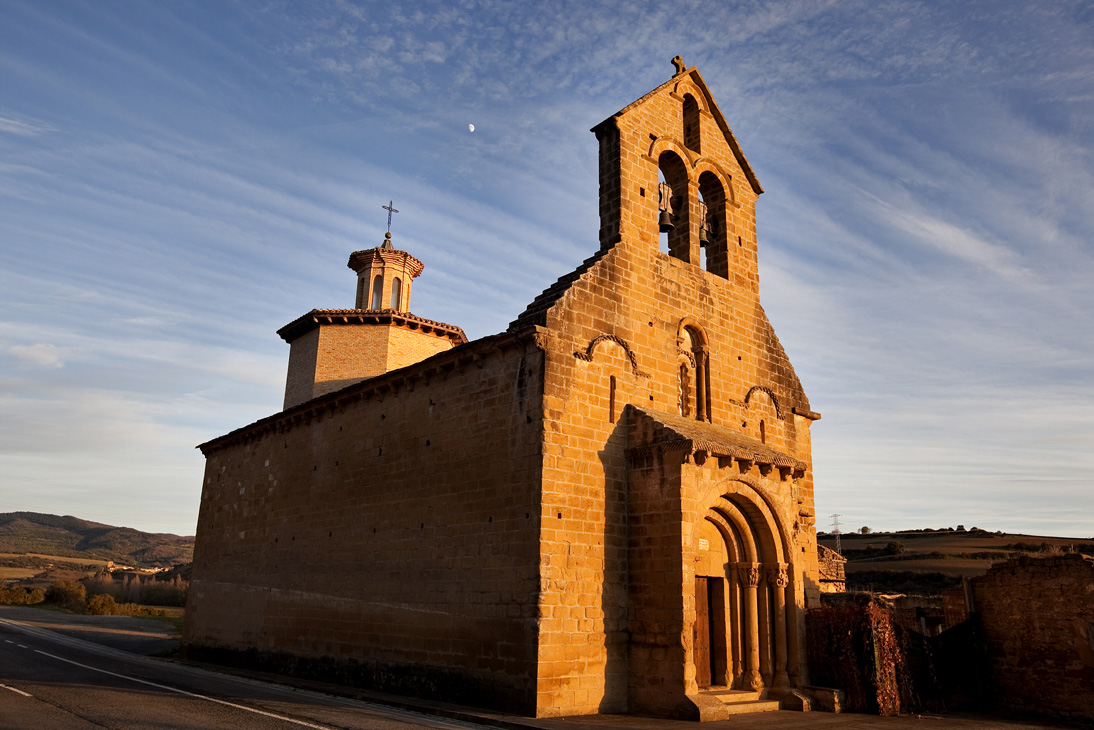
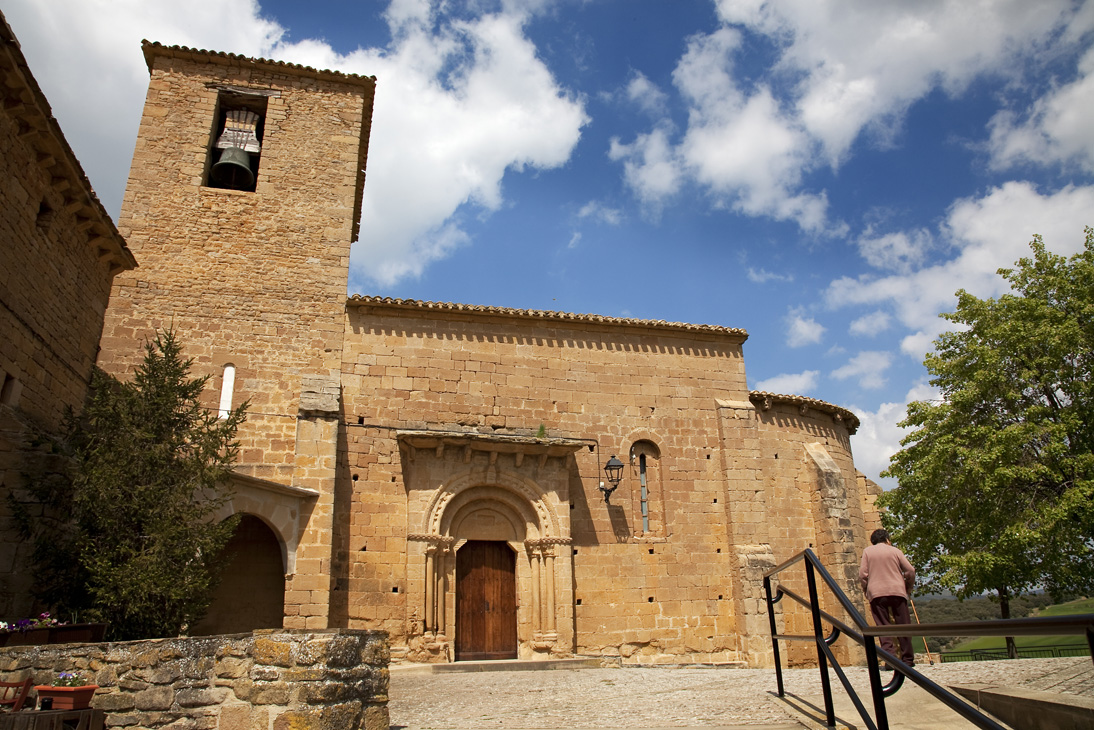
The Romanesque influence can be seen everywhere in Central Navarre. We have suggested four routes to explore the most important historical heritage in the region from the 11th and 12th centuries.
The Romanesque influence can be seen everywhere in Central Navarre. We have suggested four routes to explore the most important historical heritage in the region from the 11th and 12th centuries
Romanesque triangle: Puente la Reina/Gares, Muruzábal and Olcoz
If you are going to visit the northern part of Central Navarre, be sure to check out these great examples of Romanesque architecture in the region. Visit these three towns in one day, separated by no more than a 20-minute drive.
Puente la Reina / Gares, Romanesque through and through
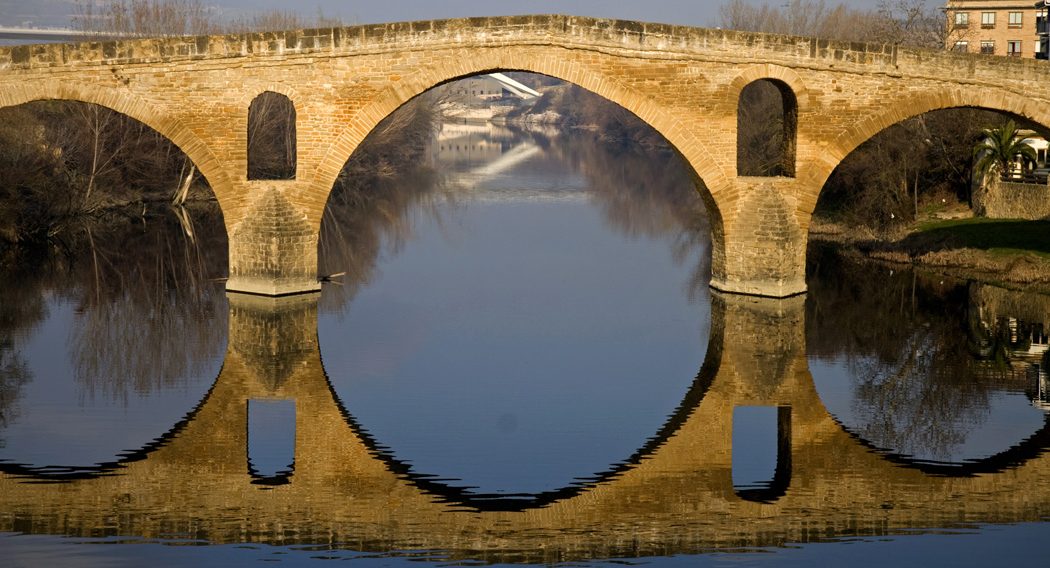
Explore the medieval history of Puente la Reina/Gares, a place steeped in history and beauty. Start your tour by crossing the spectacular Romanesque bridge, a captivating structure that will surprise you with its three imposing defensive towers.
Then you can move on to the Church of Santiago el Mayor, a great example of the aesthetic evolution of the period. Finally, reconnect with the history and spirituality of the Way of St. James at the Church of the Crucifix, originally built by the Knights Templar and surrounded by the mysteries of this legendary institution.
If you visit this medieval town in August, check out the programme for the Jazz Zubipean festival, with the bridge as its backdrop. The end of September is when the Traditional Fairs are held; they include such curious sights as laya or foot-plough racing, a traditional sport using farming implements. Autumn is the time of the aroma and flavour of the region’s typical peppers, which are a red delicacy.
And if you want suggestions when you’re there, just go to the Puente la Reina/Gares Tourist Office.
Muruzábal, the mysterious jewel of Eunate
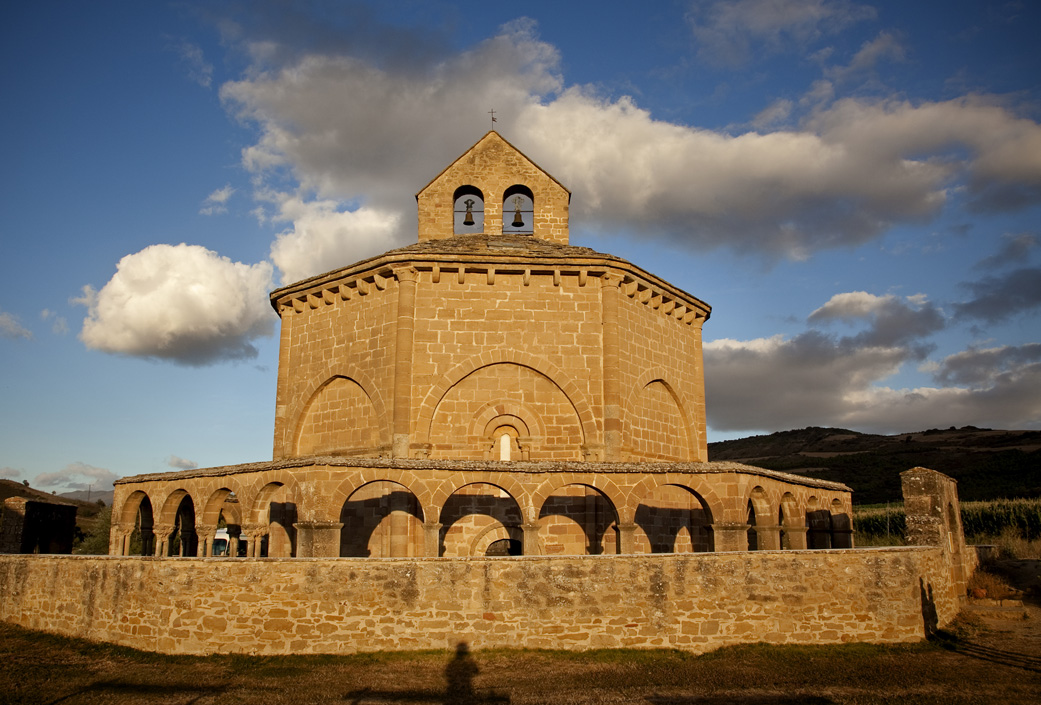
You will find the spiritual centre of Eunate just a few minutes from Puente la Reina, in Muruzábal. There are many mysterious stories and legends about this church dedicated to the Virgin Mary, which has been declared a National Monument and Site of Cultural Interest.
Delve deeper into the mysteries of this architectural marvel and its importance to the Way of St. James in our article about Eunate.
Romanesque architecture in the municipality of Olcoz
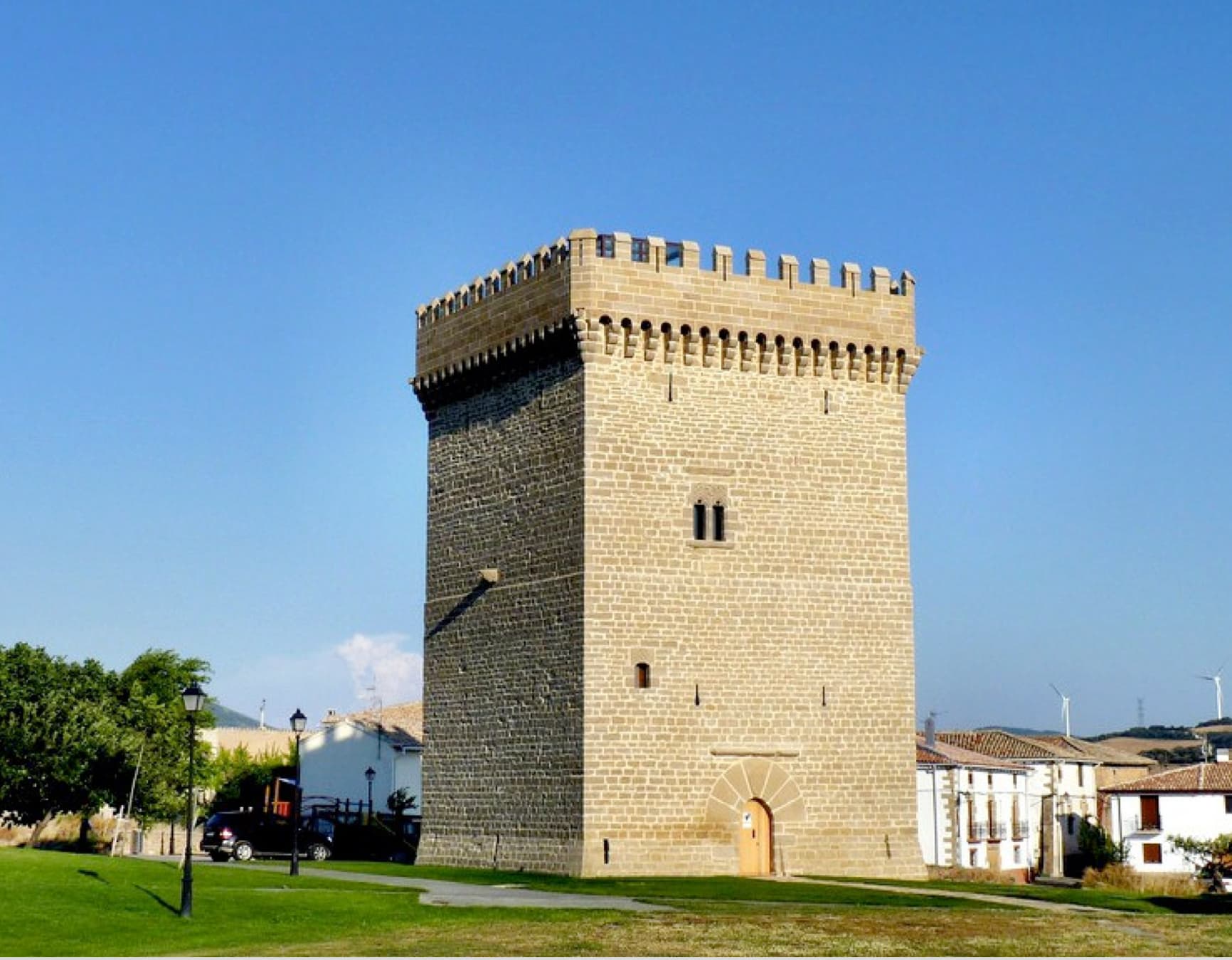
Take a trip to see the Church of San Miguel in Olcoz and discover its Romanesque iconography as you admire the façade, capitals, and archivolts, all of which are in excellent condition. And, once there, make sure you don’t miss the Olcoz Medieval Tower.
Romanesque and pre-Romanesque architecture in La Valdorba
Get to know the Navarrese valley of La Valdorba through its rich Romanesque and pre-Romanesque heritage, which is particularly evident in the religious architecture of the period.
History and architecture in Eristain and Olóriz
Visit and explore the neighbouring towns of Eristain and Olóriz. There are many quaint spots full of charm and traces of Romanesque architecture in Central Navarre.
In Eristain, you can visit one of the oldest surviving buildings in the Valdorba Valley: the Church of Santa María. This Christian temple has been impeccably restored and is a great example of Romanesque architecture.
The Romanesque architecture comes to life in all its majesty in Olóriz in buildings such as the Church of San Bartolomé. Wander through the town’s streets and enjoy the beautiful view of the Peña Unzué mountain. Just five minutes away from the town by car, you will come to a Romanesque shrine chapel: San Pedro de Etxano. It is not certain if it belonged to a monastery or to a member of the nobility. Extano was built to withstand time and stands in the middle of pastureland. Take time to read its iconography as if it were a comic and discover the characters and motifs on capitals, corbels and archivolts.
Unique frescoes and rural Romanesque art in the Shrine Chapel of Cristo de Cataláin
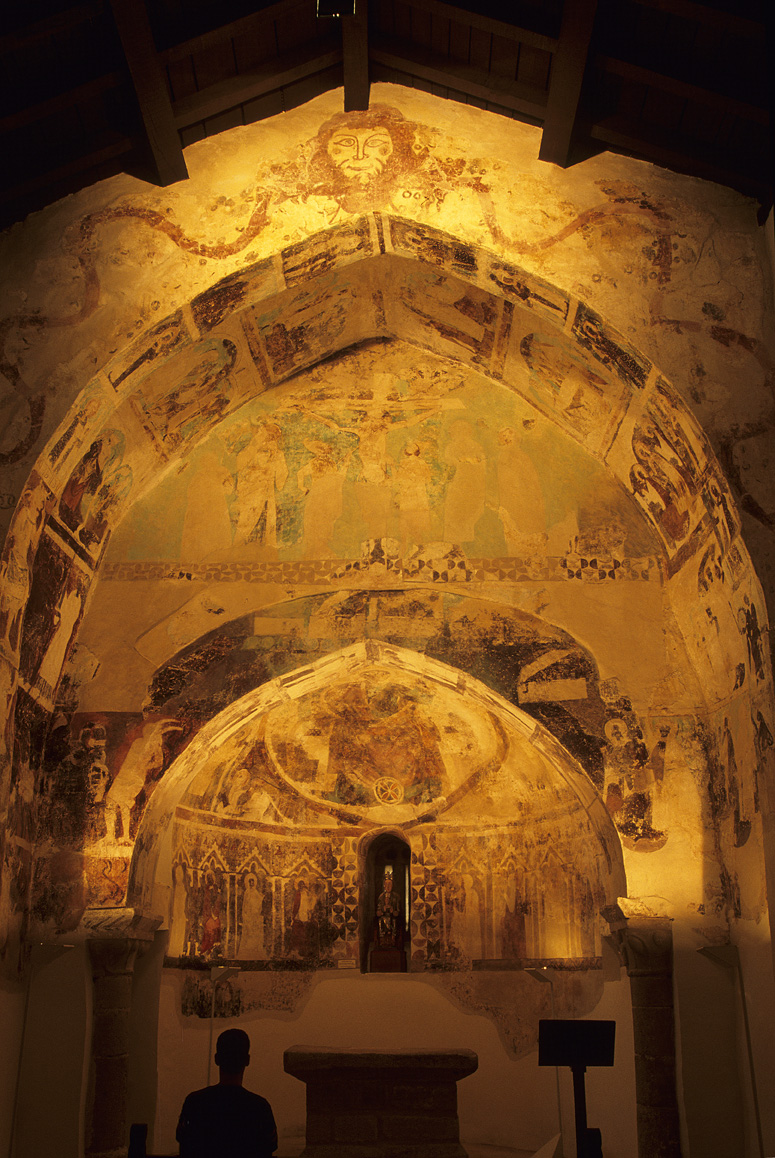
In Garínoain, you will find the imposing, majestic Shrine Chapel of Santo Cristo de Cataláin. You will be captivated by its history: this architectural gem was built in the 12th century and originally belonged to the Collegiate Church of Santa María de Roncesvalles. Now considered a shrine chapel, it keeps alive the Romanesque legacy in Central Navarre.
Romanesque churches in Leoz, Olleta and Orísoain
In Leoz and Olleta, which are both council districts in the municipality of Leoz / Leotz, you will find two Romanesque churches that will allow you to appreciate the architecture of the period in great detail: the Church of La Natividad in Leoz and the Church of La Asunción in Olleta. These are two great examples of 12th-century heritage in the region.
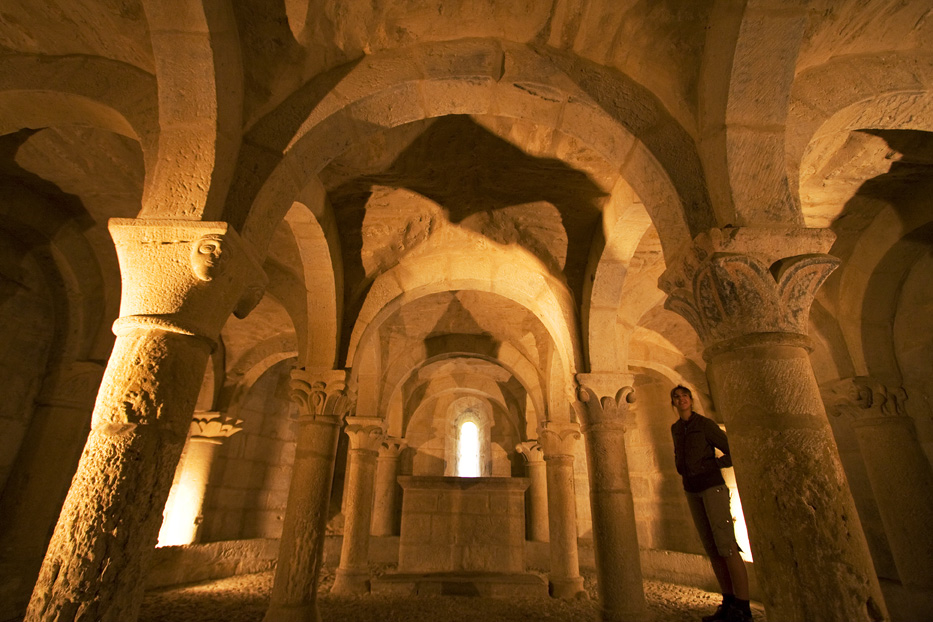
Discover the hidden treasures of Orísoain in the Church of San Martín. This building shows off all of its splendour on the façade, a spectacular example of the beauty of art during the medieval period. Make your way down a small staircase to its crypt, a small space with a tiny window and six columns decorated with intertwined stems and flowers: two characters, who may be mermaids lifting their double tail, entwined snakes and birds in a corner whose beaks are touching in the centre.
Once you have finished, walk around the outside of the chapel to take in the views of the gentle Valdorba landscape. A picture-perfect postcard of simple yet stunning beauty, which is particularly breathtaking as the sun sets. Breathe in the view as you cross the hills, listen to the sounds of the animals there and take the odd photo to show off.
Iratxeta’s treasure
A stone granary, something which is quite unusual, stands in the centre of Iratxeta. This medieval building, declared an Item of Cultural Interest, is a rectangular structure supported by rounded arches.
Plan your visit to Valdorba’s Romanesque heritage
The Valdorba Development Association organises guided tours of the valley’s Romanesque heritage, run by volunteers and on request; check availability on their
- Whatsapp 626 153 809
- Email: visitas@valdorba.es
- Or on their website.
Orísoain, Catalain, Iratxeta’s granary, Eristain and Etxano are the most popular destinations.
As well as the churches, you can visit the Valdorba Ecomuseum, which offers an immersive experience of traditional life in Valdorba. The highlights inside include a recreation of farming life 50 years ago, a viewpoint over the surrounding countryside and an area on bee-keeping with live hives. Outside, there is an old-fashioned farmyard, herbs and the star of the museum: the adorable Platero the donkey who turns a waterwheel.
Historical heritage in the heart of Central Navarre, Olite, Tafalla and nearby towns
The towns in the central part of Navarra Media boast a wealth of Romanesque heritage that should not be missed. Come and experience Romanesque architecture in the heart of Central Navarre:
Romanesque churches and a crypt in Tafalla, Olite / Erriberri and San Martín de Unx
The Church of Santa María in Tafalla is Gothic and Baroque as it stands today, but it still has traces of the Romanesque, particularly in its original structure. Some remains of the early 12th-century Romanesque church are part of the current base of the building.
Check out the oldest parish church in Olite/Erriberri, the Church of San Pedro. This treasure reflects the cultural richness of this town, which is widely renowned for its castle.
In San Martín de Unx, take a look inside the Church of San Martín de Tours, which will captivate you with its characteristic early architecture, typical of the rural Romanesque style. Allow its beautiful façade to inspire you and discover the mysteries of the town by visiting the crypt in the very heart of the church.
If you want to make your visit more special, check out the Romanesque Wine experience, when a local guide (with wine) will take you around San Martín de Unx, the church and its crypt; one of the many activities that Mucha Tierra runs in the town.
Ujué / Uxue: a town and a sanctuary
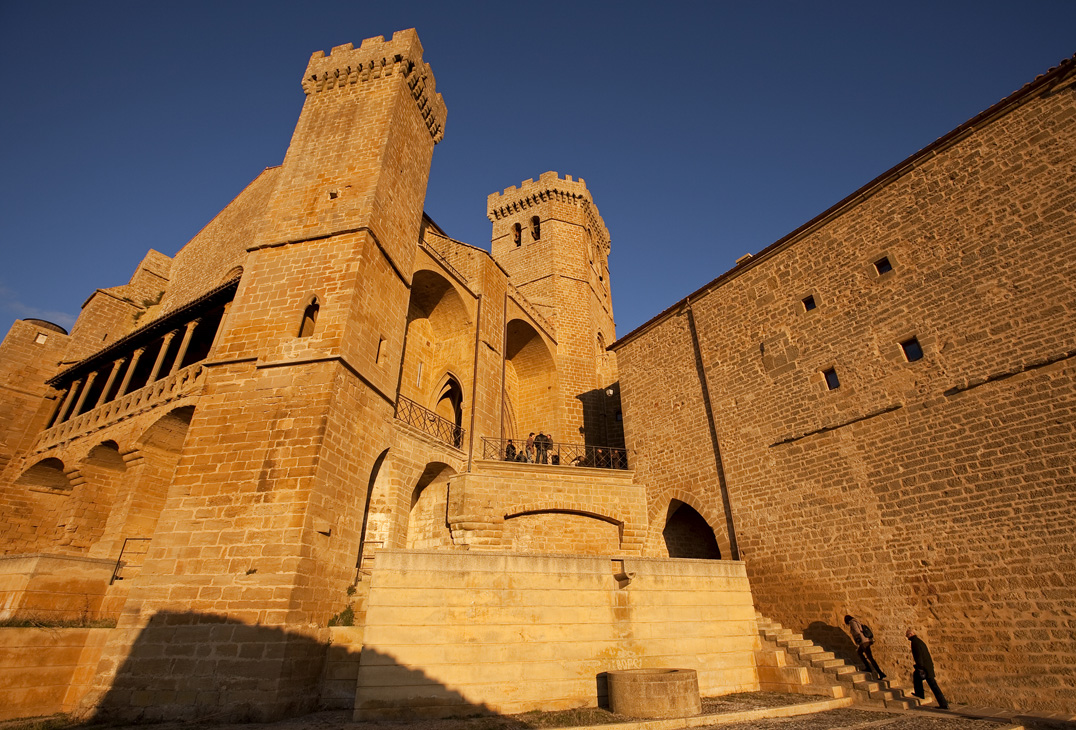
Ujué boasts one of the most impressive examples of Romanesque architecture in Central Navarre. Explore the majestic Church of Santa María, a medieval sanctuary that exudes spirituality from every corner. Learn about the privileged location of this thousand-year-old Christian church. Pay special attention to its structure and the quality of its sculptural details, which will fill you with inspiration. Find out more about the medieval heritage of this town here.
Romanesque architecture in the southern part of Central Navarre: Mélida, Carcastillo and Murillo el Cuende
The southernmost area of Central Navarre is not far behind in terms of Romanesque heritage. Find out more about the area’s most outstanding Romanesque buildings during your visit to these three neighbouring towns.
The vibrant Cistercian art of La Oliva monastery
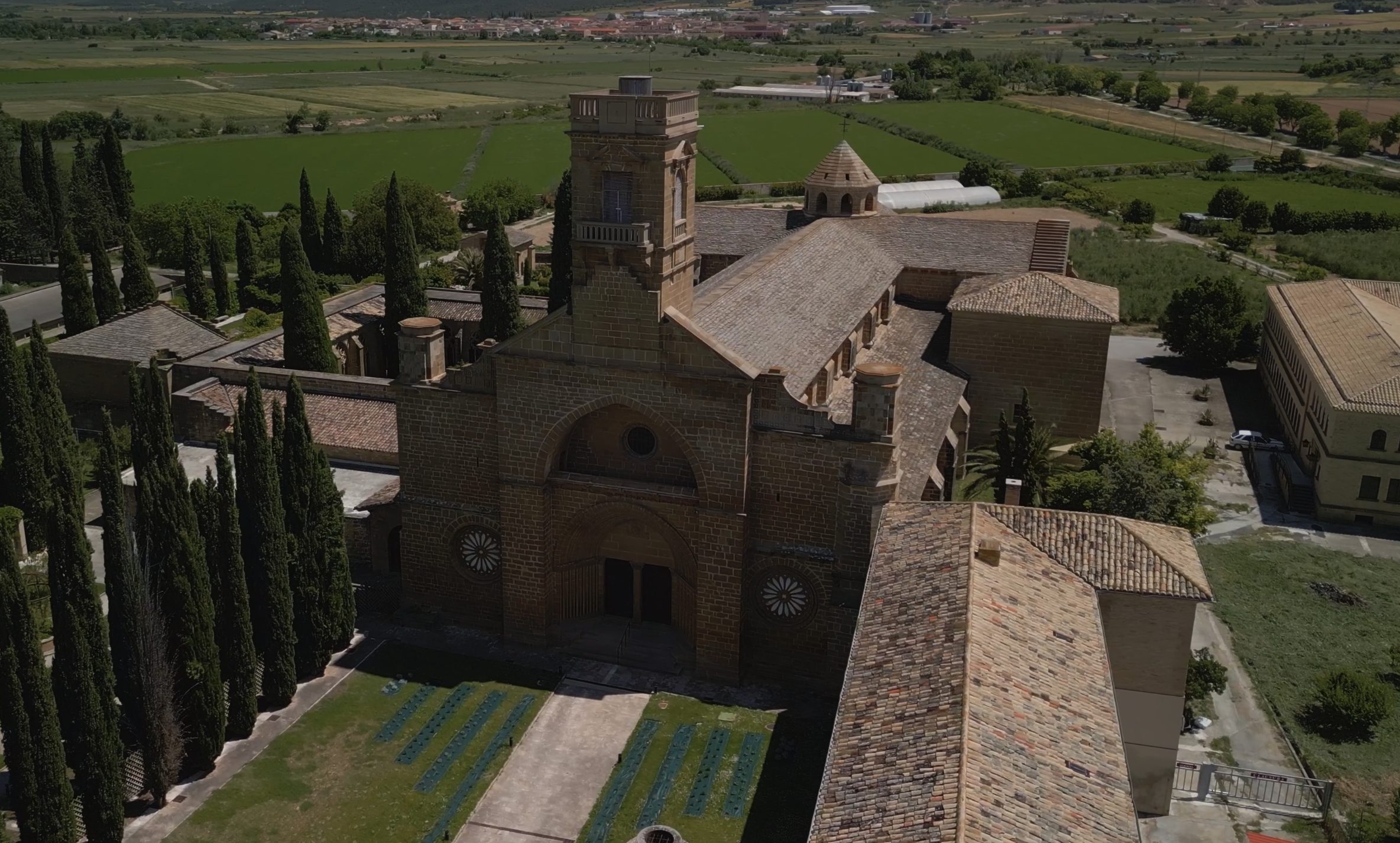
Experience living in a monastery at the Monastery of La Oliva in Carcastillo. This religious temple continues to thrive thanks to the devout religious community that lives there. Enjoy the spirituality that emanates from its walls during your visit and book a room to make the most of your stay in this jewel of Cistercian art in the Central Navarre region.
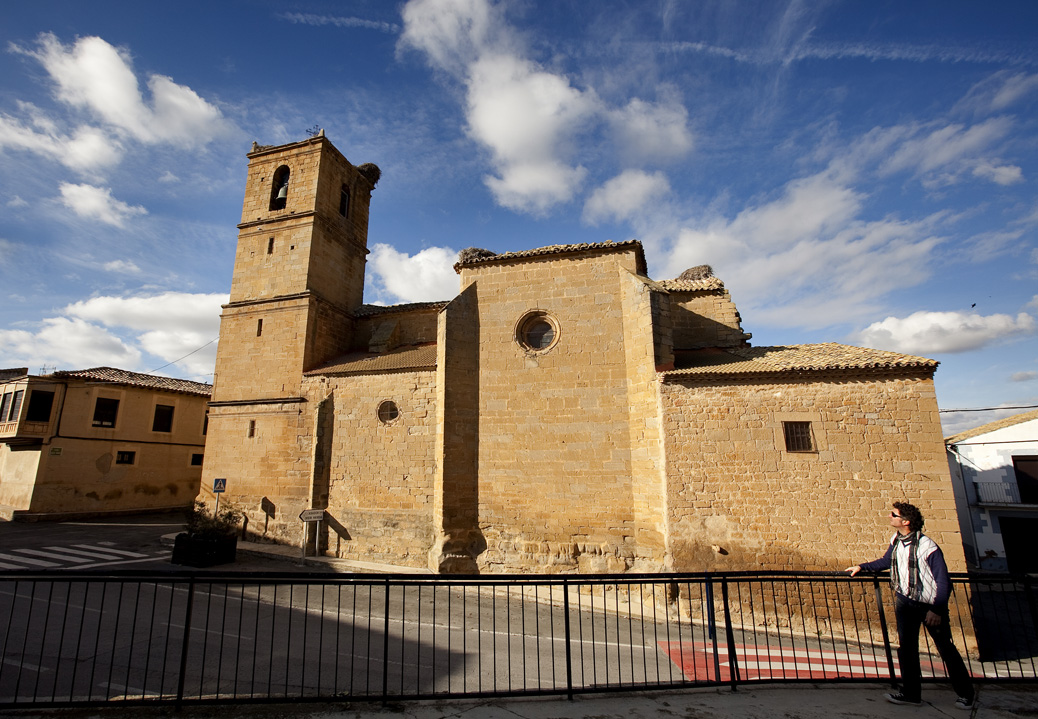
Take a stroll through the narrow streets of Carcastillo until you reach the Church of El Salvador, a beautiful example of Romanesque architecture in the town.
Historical heritage in Mélida and Murillo el Cuende
Central Navarre boasts not one but two shrine chapels of the Holy Cross, in Mélida and Murillo el Cuende.
The tiny, modest one in Médila is right next to the cemetery. It is a good example of rural religious architecture and has features reminiscent of other buildings in Central Navarre, such as the Church of Carcastillo .
The Shrine Chapel of the Holy Cross in Murillo el Cuende is a medieval gem from the 13th century and stands on a small hillock. Its semicircular apse and its unique vaulting, an example of the art of that time, delight visitors.