
13-19 September
Olite/Erriberri Festivities
Olite - Erriberri

Central Navarre is a land of pilgrimage. It is where two routes of the French Way of St. James meet: the one from Saint-Jean-Pied-de-Port and the route from Somport, also known as the Aragonese Way. Both routes join at Puente la Reina/Gares.
Central Navarre is a land of pilgrimage. It is where two routes of the French Way of St. James meet: the one from Saint-Jean-Pied-de-Port and the route from Somport, also known as the Aragonese Way. Both routes join at Puente la Reina/Gares, a point where pilgrimage, culture and culinary heritage come together. Here are the must see and do, but we are sure you will find much more to do. Have a good journey or ‘Buen Camino!’, as the pilgrims say.
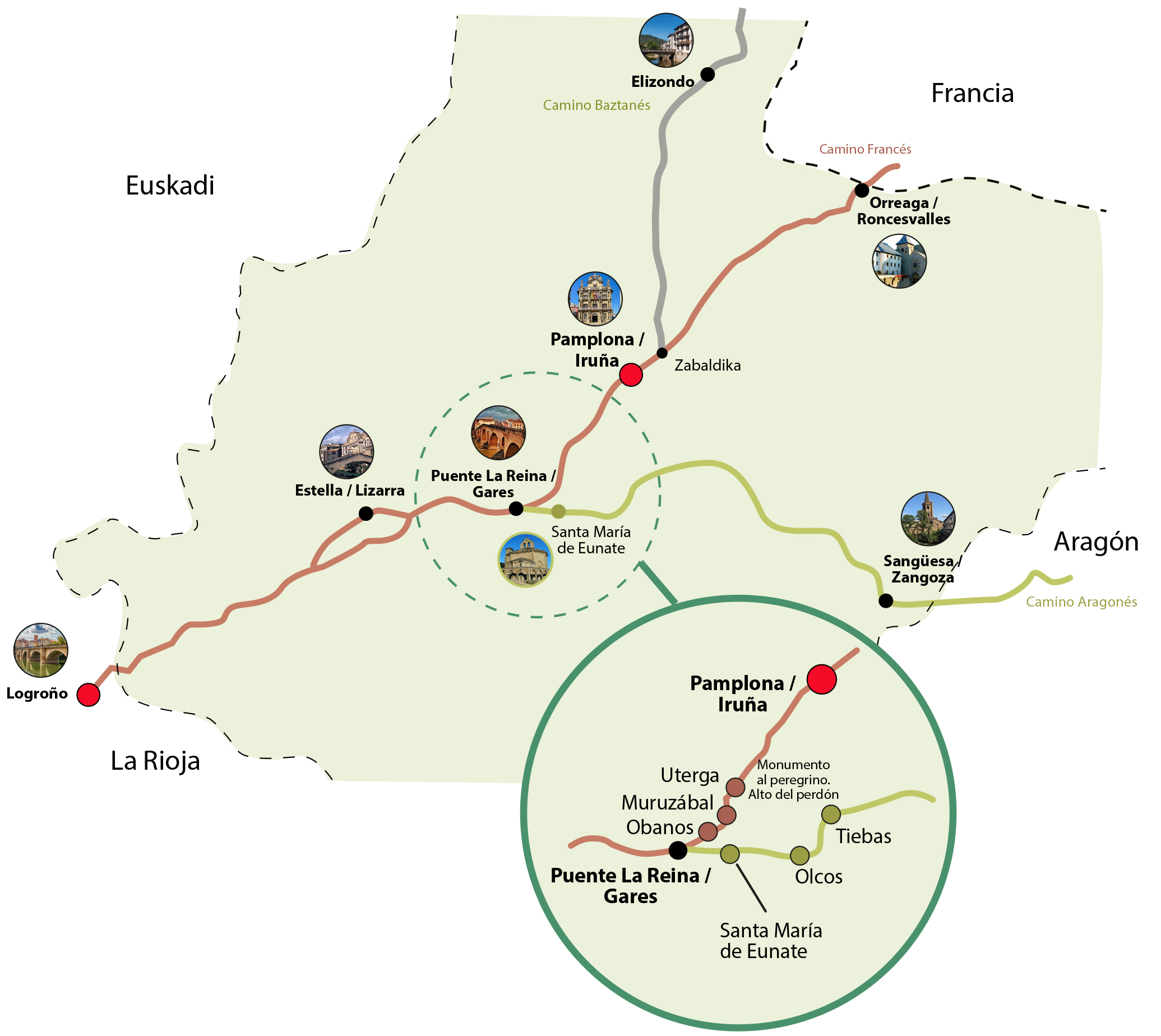
The French Way starts in Saint-Jean-Pied-de-Port (Donibane Garazi), a town in Lower Navarre in France. This is considered one of the most beautiful and popular routes.
The French Way enters Navarre through Roncesvalles and, after leaving Pamplona/Iruña behind, it comes into Central Navarre over Alto de Perdón, in Uterga. The route onwards to Puente la Reina/Gares is peppered with cultural, natural and historical gems.
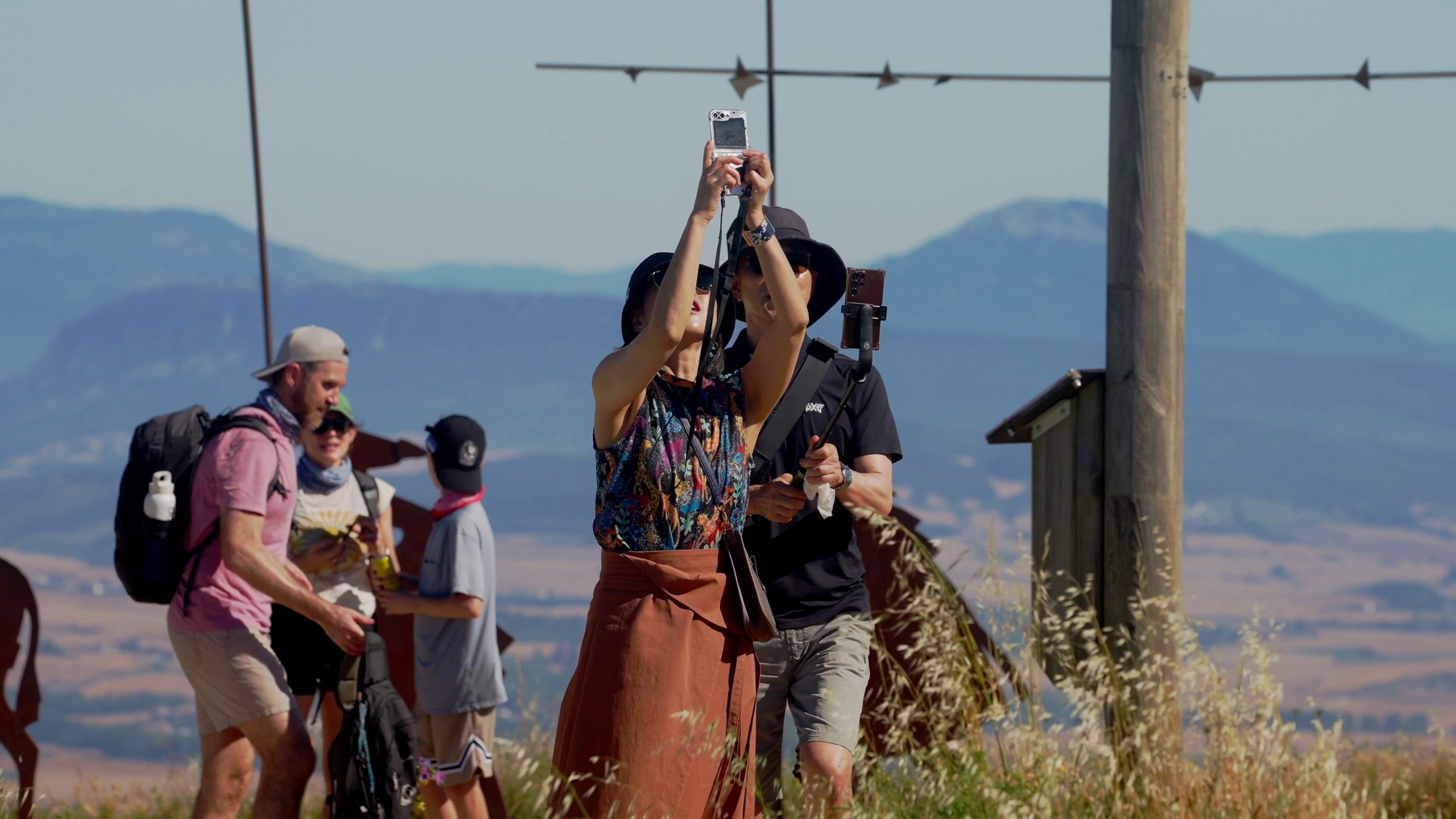
Our pilgrims’ way through Central Navarre starts at the top of the Sierra del Perdón mountain range, in Uterga municipal district. The Monument to the Pilgrim stands there.
The work of the sculptor Vicente Galbete in 1996, this set of sculptures comprises twelve figures of pilgrims from different eras from the Middle Ages to the present day. The inscription reads ‘Where the path of the wind crosses the path of the stars’.
The steel monument offers breathtaking views over a unique landscape, steeped in symbolism and beauty.
After visiting towns such as Legarda and Uterga, Muruzábal is not to be missed along the Way of St. James. Its town centre boasts a beautiful heritage, including the Parish Church of San Esteban, which houses works of great richness, and the turreted palace of the Marques of Zabalegui and its Baroque façade, which is now home to a winery.
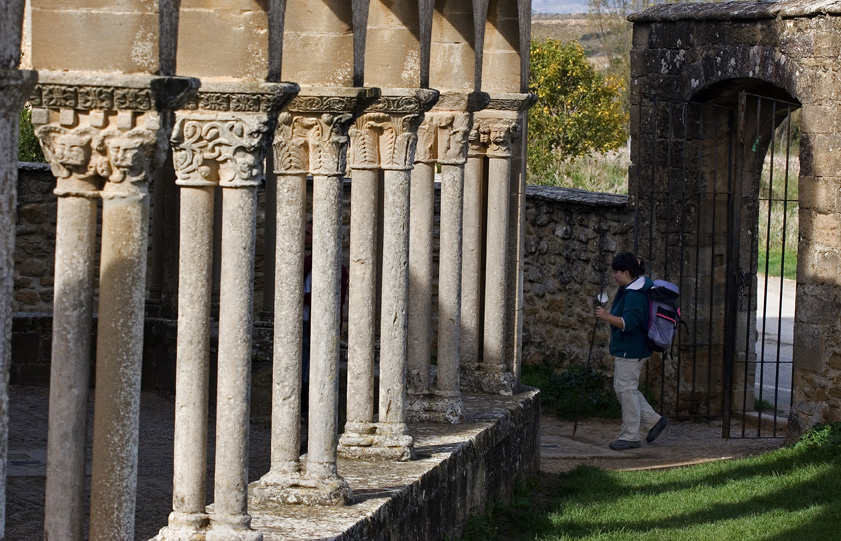
And we shouldn’t forget one of the most iconic landmarks on the Way of St. James: the Shrine Chapel of Eunate.
Even though the famous octagonal shrine chapel is on the Way of St. James along the route from Sangüesa, pilgrims make their way from Muruzabal to visit this special place just two and a half kilometres outside the town.
Continuing along the pilgrims’ way, the next stop in Obanos is not to be missed. This charter town is striking and majestic, mirroring its noble and defensive medieval past, which is reflected in its buildings such as the Muzquiz House and the Zabalegui House.
As you stroll along its streets, you will come to charming spots steeped in history, including its squares, its arch with coat-of-arms, and its churches and shrine chapels. And don’t forget it’s become a tradition to take a photo of the striking Obanos Gate or from the Shrine Chapel of Nuestra Señora de Arnotegui and its breathtaking views over the beautiful Valdizarbe Valley.
And to top it all off, the Obanos Mystery Play – a unique experience declared a Festivity of National Tourist Interest – pervades the town and is performed there every other year.
Somport, a border crossing between France and Aragón through the Pyrenees, is the gateway of the French Way from Aragón or the Aragonese Way. The secondary route, which reaches Navarre through Sangüesa, enters Central Navarre at Tiebas, and takes the pilgrims on a scenic route through municipalities such as Muruarte de Reta, Olcoz and Enériz.
At Puente la Reina/Gares, the Aragonese Way joins the French one from Roncesvalles, and becomes a single route all the way to Santiago de Compostela.
Would you like to know what is waiting for you when you visit?
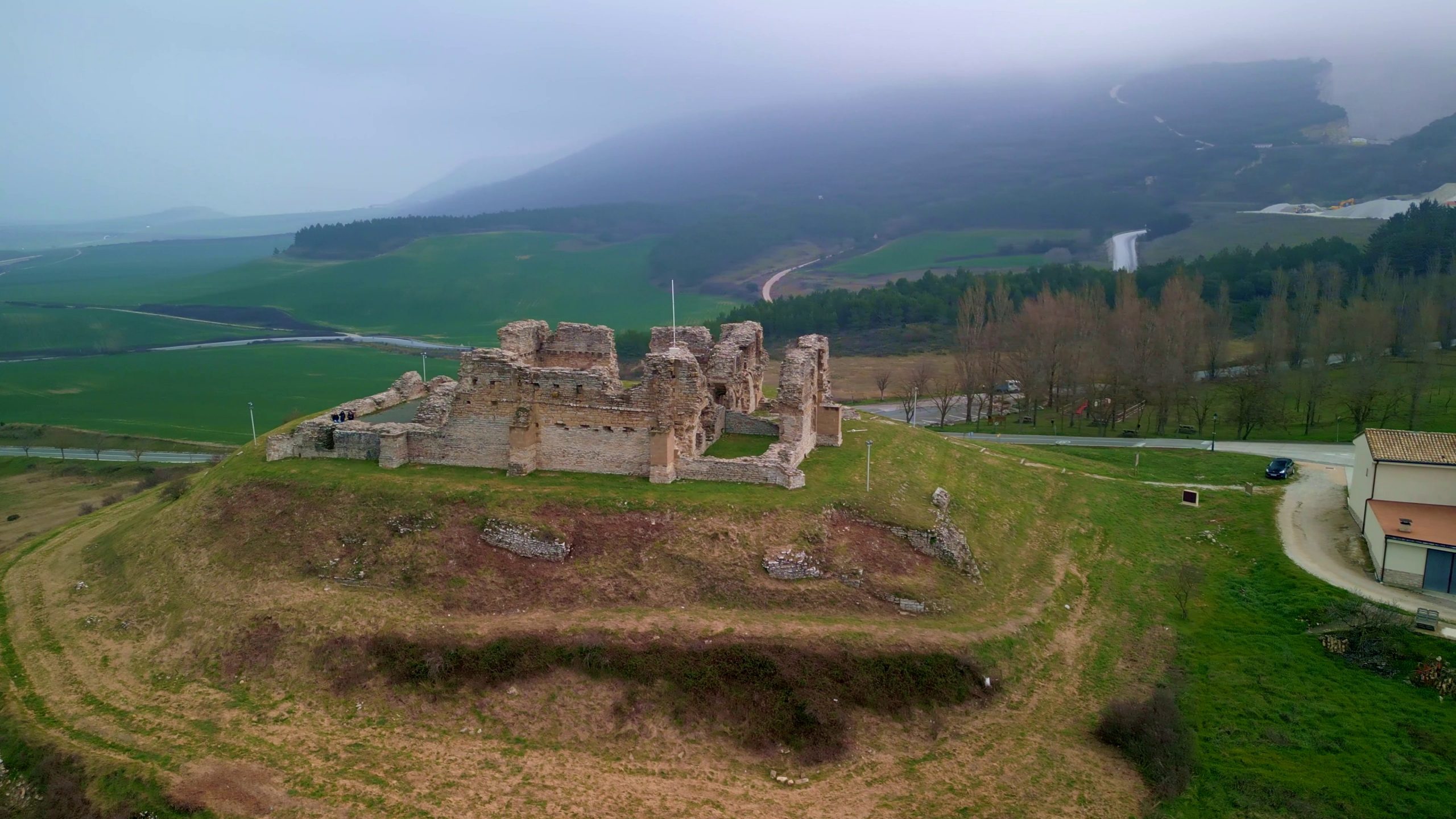
The French Way from Aragón enters Central Navarre at Tiebas, a beautiful charter town on the north slope of the Sierra de Alaitz mountains. Pilgrims will there find the remains of what was one of the most important castle-palaces of the Kingdom of Navarre, and which was home to the Navarrese monarchs in the 13th and 14th centuries.
Tiebas Castle was built on the site of an Iron Age settlement.
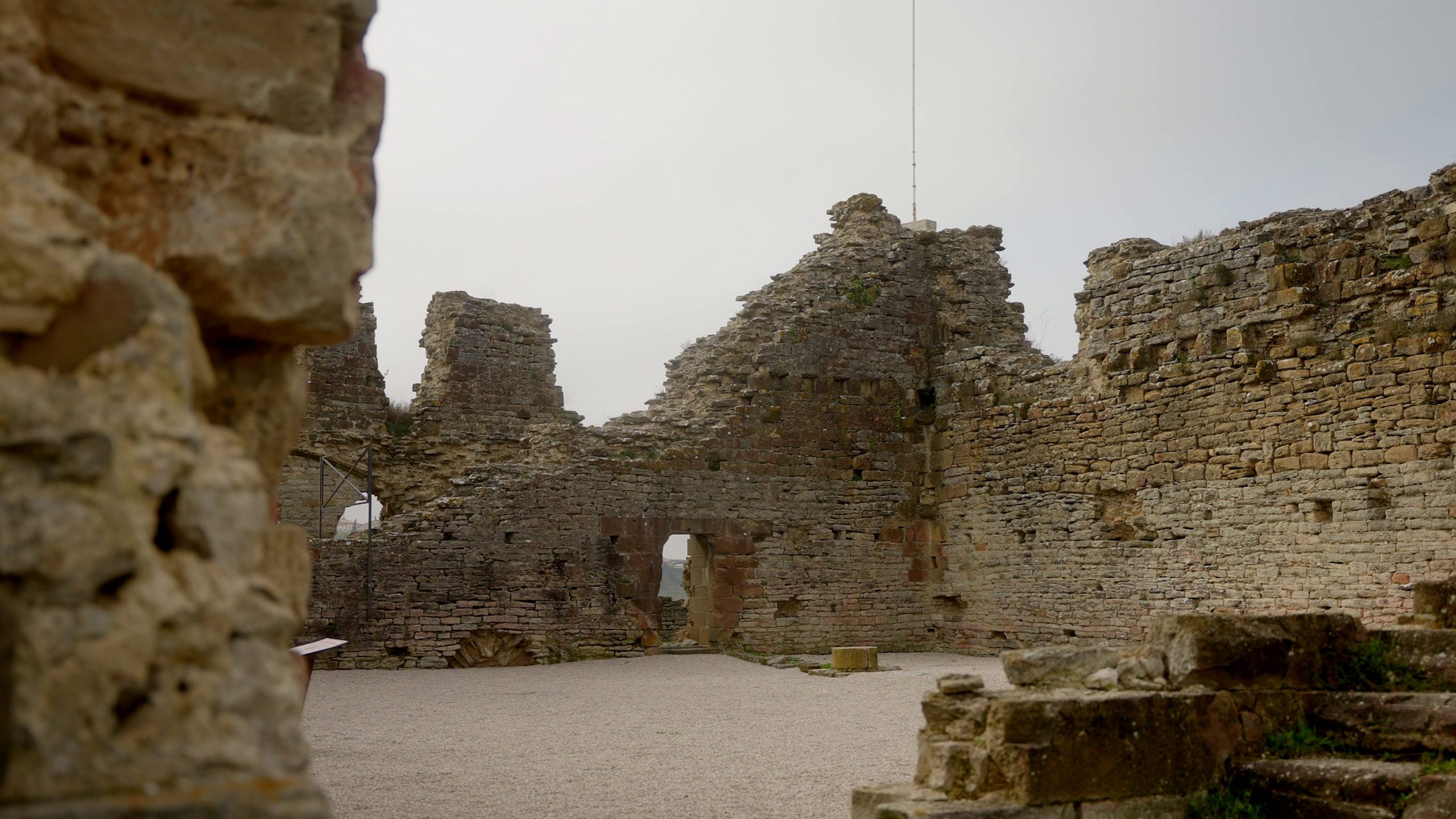
The palace complex was laid out over three different areas. The king’s residence was at the very top. It was surrounded by outbuildings, including the kitchen, falconry mews, latrines, storehouses… And, finally, the vegetable patch or garden of the castle was at the lowest level.
Add this visit to the list; it will whisk you back to the past to discover how Navarrese royalty lived at that time. If you want to learn more about its history, you can find more information here.
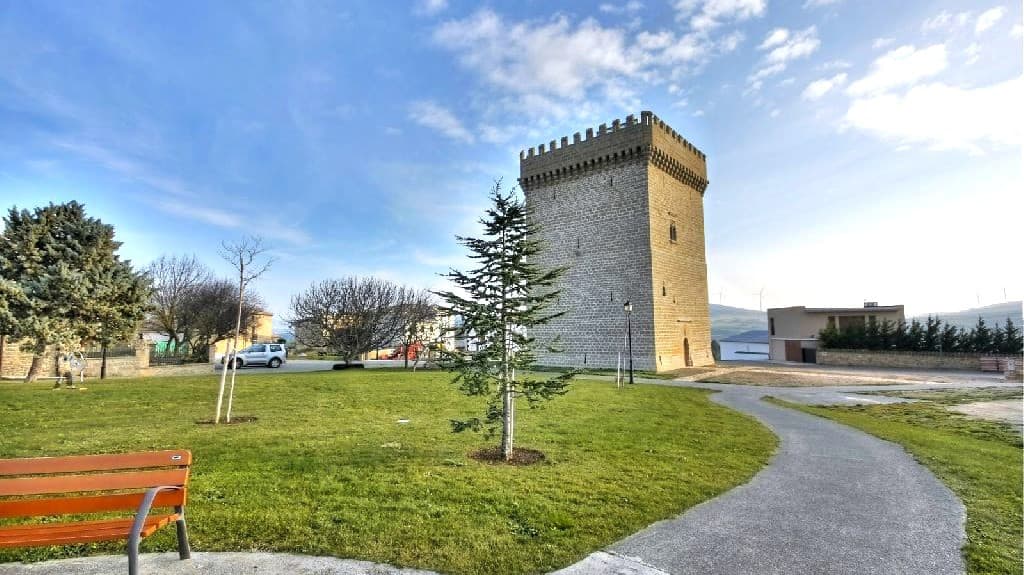
Olcoz is the next town you will come to after Tiebas-Mururarte de Reta. It is home to another medieval gem, the Olcoz Tower. The four floors of the now refurbished towers are home to the administrative office of Olcoz Council District, multipurpose cultural rooms and an interpretation centre on the Romanesque, with guided tours.
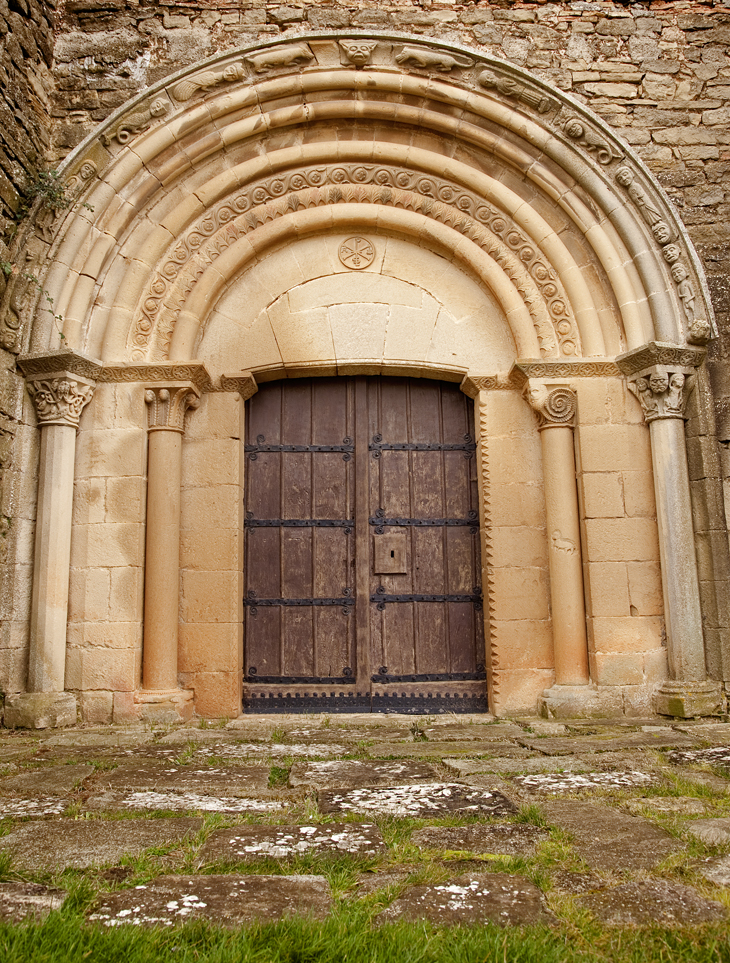
We cannot end without mentioning the Church of San Miguel de Olcoz, with its portal that mirrors the one of the Shrine Chapel of Eunate in Muruzábal: the figures of both buildings have been looking at each other for centuries.
Shrine Chapel of Eunate
The way continues. After stopping at the quiet villages and towns along the route, such as Adiós and Enériz/Eneritz, you will come to the Shrine Chapel of Santa María de Eunate in the Muruzabal municipal district.
This Romanesque gem and National Monument is shrouded in mystery; it is two and a half kilometres outside Muruzábal, in the middle of the countryside on the French Way from Aragón.
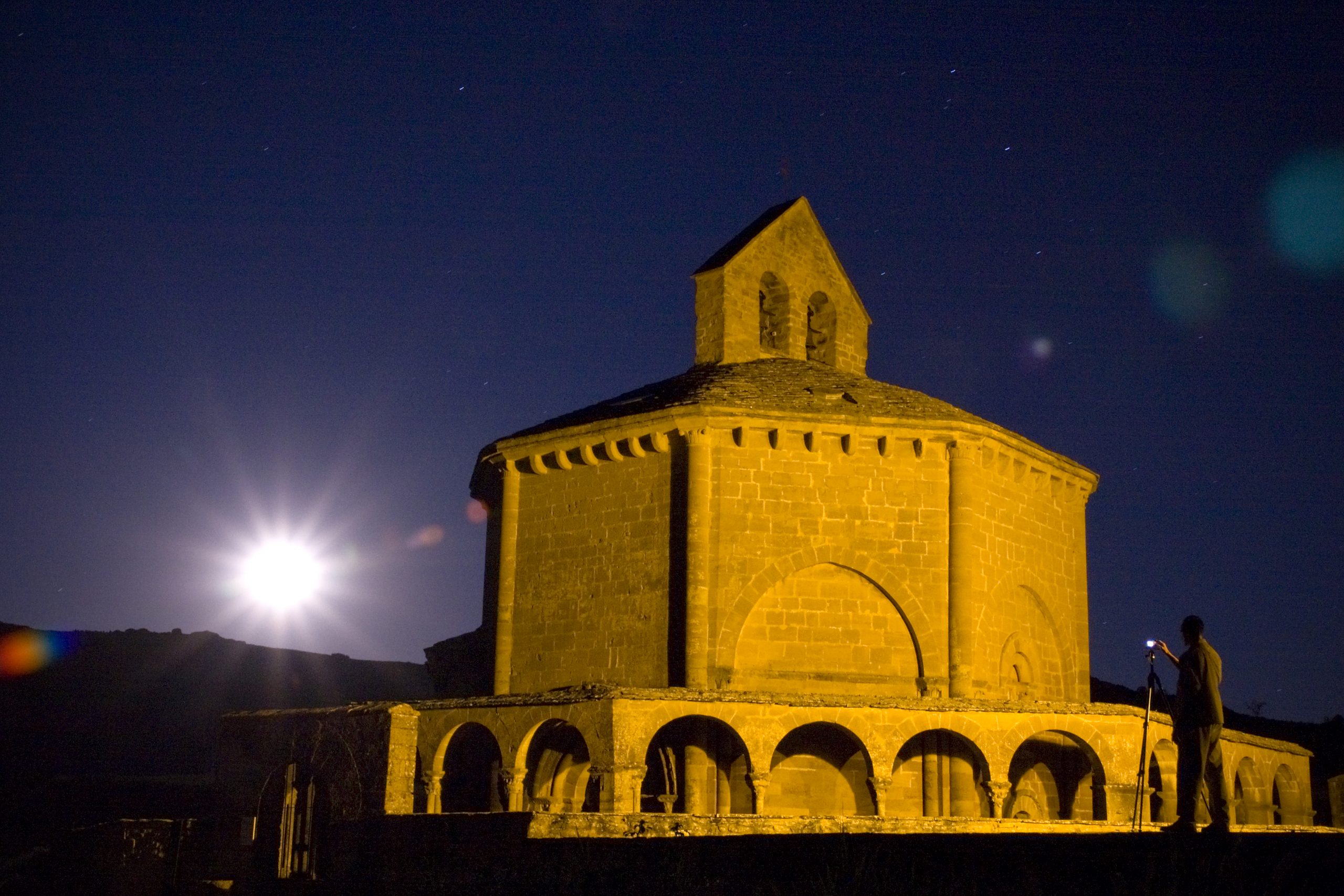
This architectural marvel, noted for its unusual octagonal design in ashlar stone, is a place for reflection, silence and faith. It is home to the beautiful statue of the Virgin Mary of Eunate.
You can get more information on this building and your pilgrim’s stamp from Onat House, next to the church and obtain your pilgrimage stamp.
If you want to learn more about its importance for the Way of St. James, you can find what you are looking for here.
Whichever route you choose, Puente la Reina/Gares is the junction of the two routes of the French Way of St. James. The two become one from here to Santiago.
The hostel of the Convent of the Poor Clares, next to the Church of the Crucifix, is one of the first places you will come to in this beautiful town.
Make sure you take time to wander through the streets of Puente la Reina/Gares. Stroll along its bustling Calle Mayor (High Street) lined with shops.
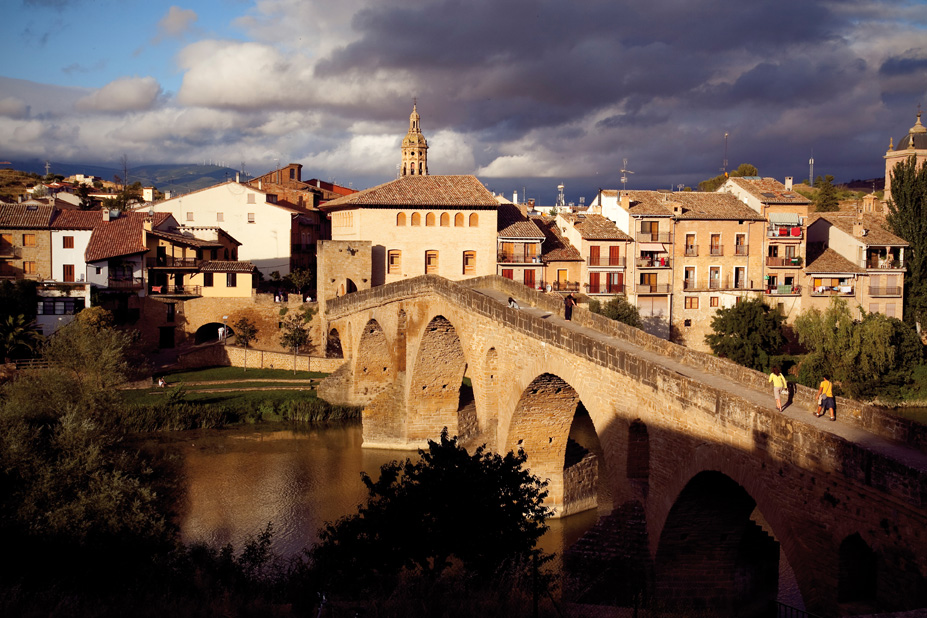
Admire the striking frontages of its houses, from which several turrets of the town walls can be seen.
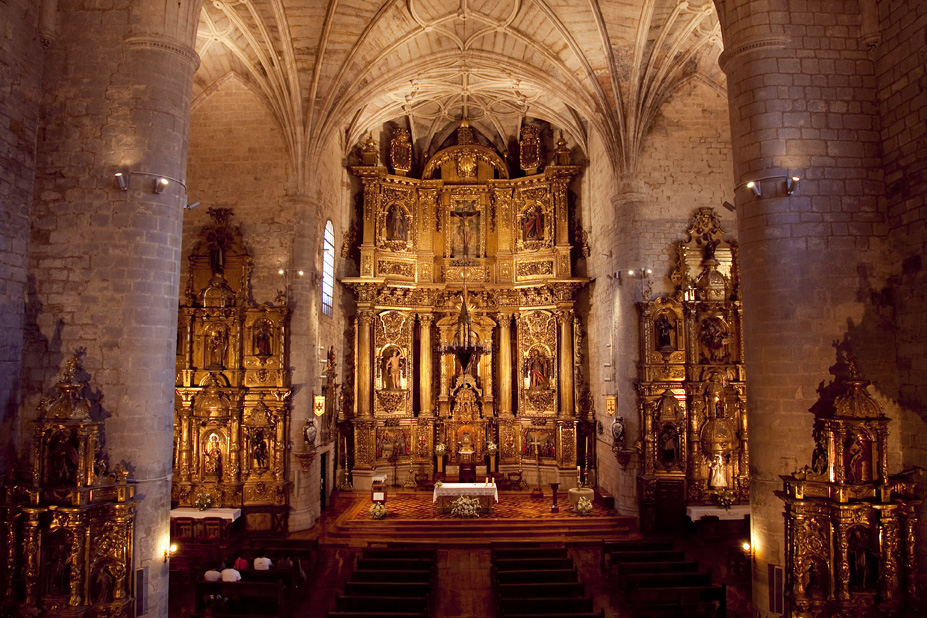
Visit the Parish Church of Santiago, a Romanesque building that is home to its famous Gothic carved statutes of St. Bartholomew and of St. James Beltza (‘black’ in Basque). There is so much more to discover. Make sure you do not miss one of the town’s most iconic features: the Bridge that is the town’s namesake, built in the 11th century to make it easier for pilgrims to cross.
The route of the Way of St. James through Central Navarre ends here, but Puente la Reina/Gares has much more to offer. Make sure you don’t miss it!
Explore its landscapes, flavors and traditions alongside the people who know the territory best. Live authentic moments that speak of calm, essence, and connection with the local community.